Blog Post
.png)
When a person is diagnosed with anxiety, the same person is more often than not also diagnosed with depression. This is because in most situations, depression is a natural consequence of anxiety. As anxiety is focused on the fear of situations that have yet to happen, prolonged periods of anxiety will ultimately sap the motivation of the individual, as the individual is constantly hyper attentive regarding threats, whether they are real or not.
...
.png)
Anxiety and depression are disorders that can hide in a multitude of ways, from disguising as other conditions to staying unnoticed completely by outside perspectives. From this point onward, the former will be referred to as “camouflaging” and the latter as “masking.”
...

Medication for anxiety and depression often utilizes a common bioinhibition mechanism. These medications, classified as antidepressants, help tackle the lack of certain biochemicals in the brain, a characteristic often found in patients who have been diagnosed with anxiety and depression. The mechanism which is utilized often involves the blocking of certain
...
.jpg)
Similarly to the mechanism of selective serotonin reuptake inhibitors (SSRIs), serotonin-norepinephrine reuptake inhibitors (SNRIs) also work with inhibition, inhibiting the reuptake of serotonin and norepinephrine to different degrees. Depending on the medication, effects may lean to either side or have a more balanced effect overall.
...
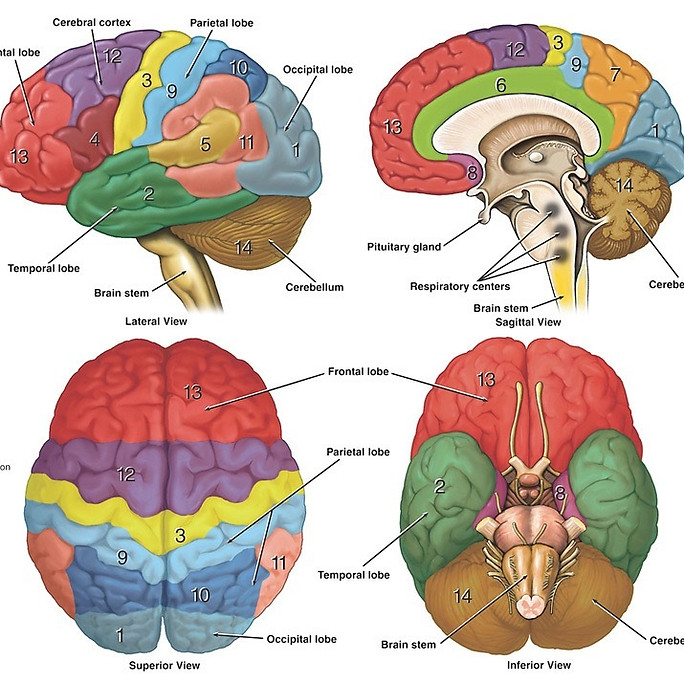
In the past century, the field of neurodivergence focused on regulating the emotions of a person, and it was in the latter half of the 20th century, where biochemical (monoamine) focused medication was prescribed to address the chemical imbalances that occurred in the human brain. This coincided with the reestablishment of neurodivergent symptoms and the
...
.jpg)
The characteristics of an attention deficit/hyperactivity disorder (ADHD) include short or disjointed attention spans, impulsive reactions, and interestingly enough, sometimes poor motor skills. As mentioned in the previous blog post, the prefrontal cortex (PFC) is in charge of behavioral regulation and emotional feedback, and it is this portion of the brain that is
...
.png)
.png)
Autism, more officially known as, autism spectrum disorder (ASD), is a neurodivergent symptom that is characterised by poor communication skills. The cause behind autism was thought to have been a result of environmental factors such as the growth environment of a developing child, but as younger children were also diagnosed with ASD, additional
...
.png)
In the past two entries, the neurodivergent conditions mentioned focused largely on a single portion of the brain. However, for anxiety and depression, multiple portions of the brain are affected. In retrospect, it makes sense because anxiety and depression do not occur together, but rather they occur subsequently! In summary, anxiety will ultimately cause a feedback loop
...
.png)
Other than the most commonly prescribed SSRIs and backup option SNRIs, there are three main types of antidepressant medication used: monoamine oxidase inhibitors (MAOIs), tricyclic antidepressants (TCAs), and atypical antidepressants. Though they are less common due to their tendency to incite more intense side effects or affect unnecessary hormones,
...
.png)
The more I look at neuroscience research articles, the more I feel the frustration of the researchers as they try to convey their findings. This is because of the limitations regarding neuroscience, limitations even I, a high school student, can see.
...
.png)
Research in neuroscience concerning psychiatric disorders typically depends on disease definitions derived from the prominent Diagnostic and Statistical Manual of Mental Disorders, fifth edition (DSM-5) having been published earlier this year. Intended solely as a diagnostic instrument, the DSM-5 treats various disorders as separate entities but nevertheless,
...
.png)
Initially, research on attachment styles primarily concentrated on children, but these behavioral studies also illuminate some puzzling behaviors observed in adolescents and adults. For instance, abandoning a perfectly good relationship due to overwhelming uncertainty about the future,
...

This blog is a little more lighthearted and small, hence the non-professional title. It is actually a follow-up on the child attachment experiment from the previous blog-post.
...
.png)
Yes I know we haven't talked about the brain for quite a while but bear with me. Knowledge has to be built upon to properly appreciate the research that goes into it, although this portion of psychology may seem like pseudo science to some. Today we are going to talk about the two attachment styles.
...
.png)
While it's tempting to dive right into how brain chemistry and structure differ in avoidant individuals, it's crucial to first understand the psychological processes that lead to these differences.
...

The human brain acts like a complex computer, organizing its various specialties in different areas. Depending on the activation frequency or volume of the brain, different people may experience different sensations for the same target. For example, the amygdala is involved in assessing threats and gets activated in situations that seem threatening, but for someone
...
.png)
The neuron is the smallest functional unit of the nervous system, transporting signals throughout organisms with chemical and electrical methods. From their discovery and development throughout the 19th and 20th centuries to the close studies of the 21st century,
...

Can AI images be used as digital medicine to treat mental health? And how is an iPhone app like the human mind?
I interviewed Professor James DiCarlo to find out the answers.
...

In a rapidly developing world of new technology, what role does engineering play in neuroscience? In what direction are brain-computer interfaces moving today, and how can students prepare for the future this progress will pave?
...